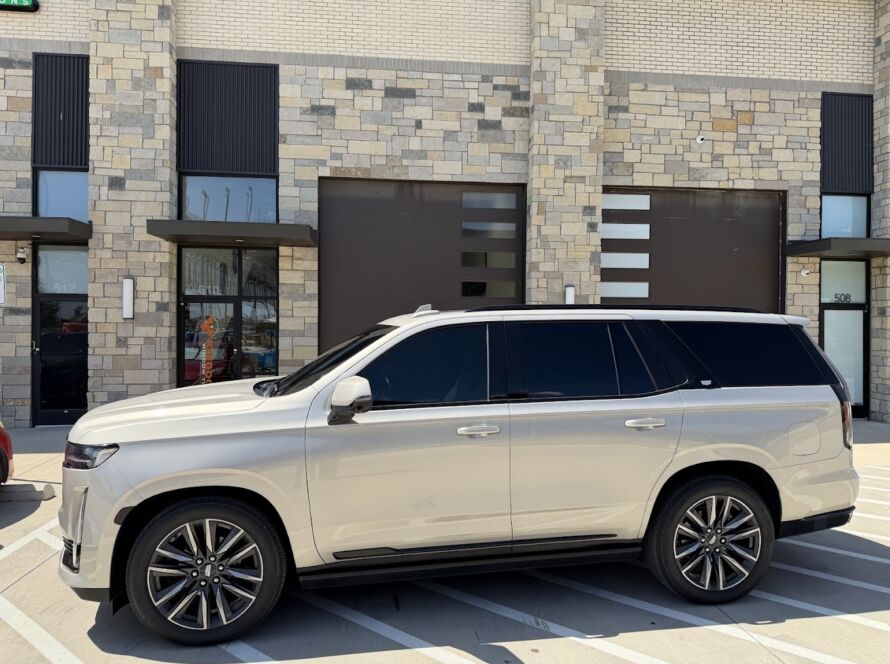
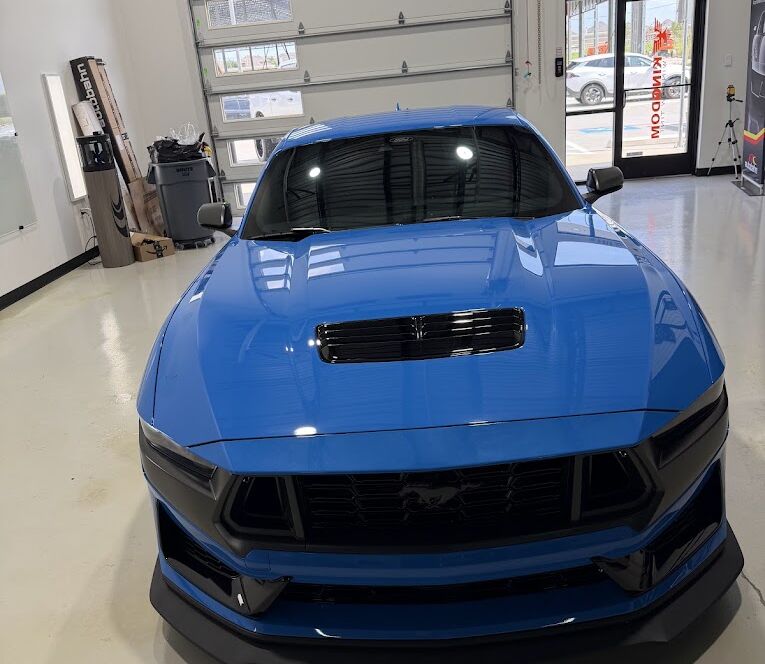
Short answer: Yes. Texas law spells out a tinted strip at the top: a sunscreening film on the front windshield that stays above the AS-1 line or within 5 inches of the top, whichever is closer to the top. It must let at least 25% of light through, reflect no more than 25%, and can’t be red, blue or amber. Many drivers still choose a light ceramic film on the full windshield for the heat, and we install it; below is what to know before you do.
“Can I tint my front windshield in Texas?” is one of the most searched tint questions in the state, and most answers online paraphrase the law, sometimes wrongly. Here it is quoted, and then explained the way we explain it at the counter.
What the Texas Law Actually Says
Texas Transportation Code Section 547.613 makes it an offense to put a material that reduces light transmission on the windshield, then lists the exceptions. The windshield exception reads:
“a windshield that has a sunscreening device that: (A) in combination with the windshield has a light transmission of 25 percent or more; (B) in combination with the windshield has a luminous reflectance of 25 percent or less; (C) is not red, blue, or amber; and (D) does not extend downward beyond the AS-1 line or more than five inches from the top of the windshield, whichever is closer to the top of the windshield”
In plain terms, all four have to be true:
- It’s a strip at the top. Not the whole glass.
- At least 25% light transmission, measured with the film and the glass together.
- 25% reflectance or less, so no mirror-style films.
- No red, blue or amber.
Where Is the AS-1 Line?
Look at the top corners of your windshield. Most have a small “AS-1” marking printed on the glass, sometimes with a short line or arrow. That mark is the lowest a legal strip can go.
The law says “whichever is closer to the top.” So if your AS-1 mark sits 6 inches down, the strip still stops at 5 inches. If the mark sits 4 inches down, the strip stops at the mark. If your glass has no AS-1 mark at all, use 5 inches.
How to check it yourself
- Find the AS-1 mark in the top corner on the driver’s side or passenger side.
- Measure straight down from the top edge of the glass to the mark.
- If it’s more than 5 inches, your limit is 5 inches. If it’s less, your limit is the mark.
- Any existing strip that hangs below that point is outside the exception.
Full Windshield Film: What Drivers Choose
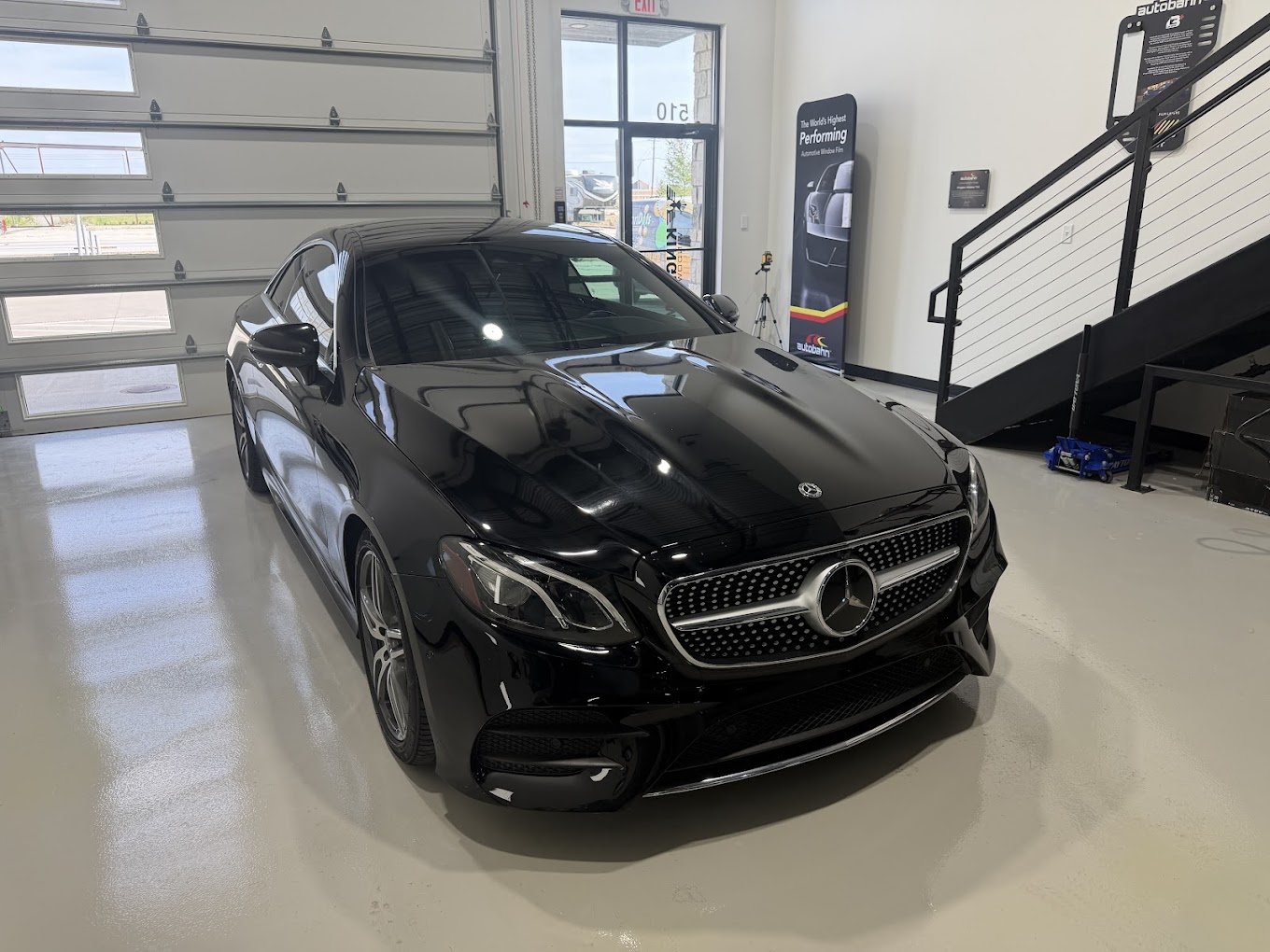
Plenty of drivers want the whole windshield done, not just a strip, because the windshield is where most of the heat comes in. Modern ceramic films are made for this: they block a lot of heat while staying light, so the view through the glass stays clear, day and night. We install full-windshield film at our shop with Autobahn Black Ceramic ($250), 3M Ceramic IR ($350) or Autobahn Ceramic i3 ($350); the white Lexus NX and the black Toyota RAV4 both left with i3 on the windshield.
What to know before you do it: the law’s written exception describes the top strip, so a full windshield isn’t spelled out there. The medical exception below covers drivers and passengers who need protection from the sun, and the section doesn’t apply to cars registered outside Texas. We’ll go over all of it with you and help you pick a light, clear film so your view isn’t affected.
The Medical Exception
Subsection (e) of the same section says it’s a defense to prosecution if the driver or a passenger “is required for a medical reason to be shielded from direct rays of the sun.” It’s written as a defense, which means it applies to the person who has that medical need, and you’d show it if you’re stopped. Talk to your doctor about documentation if this applies to you.
Enforcement and Inspections
- Enforcement: film outside the exceptions is a misdemeanor under Section 547.613, the same rule that covers dark film on the front side windows.
- No more annual safety inspection. Since January 1, 2025, Texas no longer requires a yearly safety inspection for non-commercial vehicles, so tint isn’t checked at an inspection station anymore. That changes where you’d hear about it, not what the law allows.
- Emissions testing still applies in Denton County and the rest of the North Texas emissions counties; it doesn’t involve your tint.
How the Windshield Compares to the Other Windows
| Glass | What Texas allows |
| Windshield | Top strip only: above AS-1 or 5 inches, 25%+ light, 25% or less reflectance, not red, blue or amber |
| Front side windows | 25% light transmission or more, 25% reflectance or less |
| Rear side windows | Any darkness |
| Back window | Any darkness, if the vehicle has an outside mirror on each side |
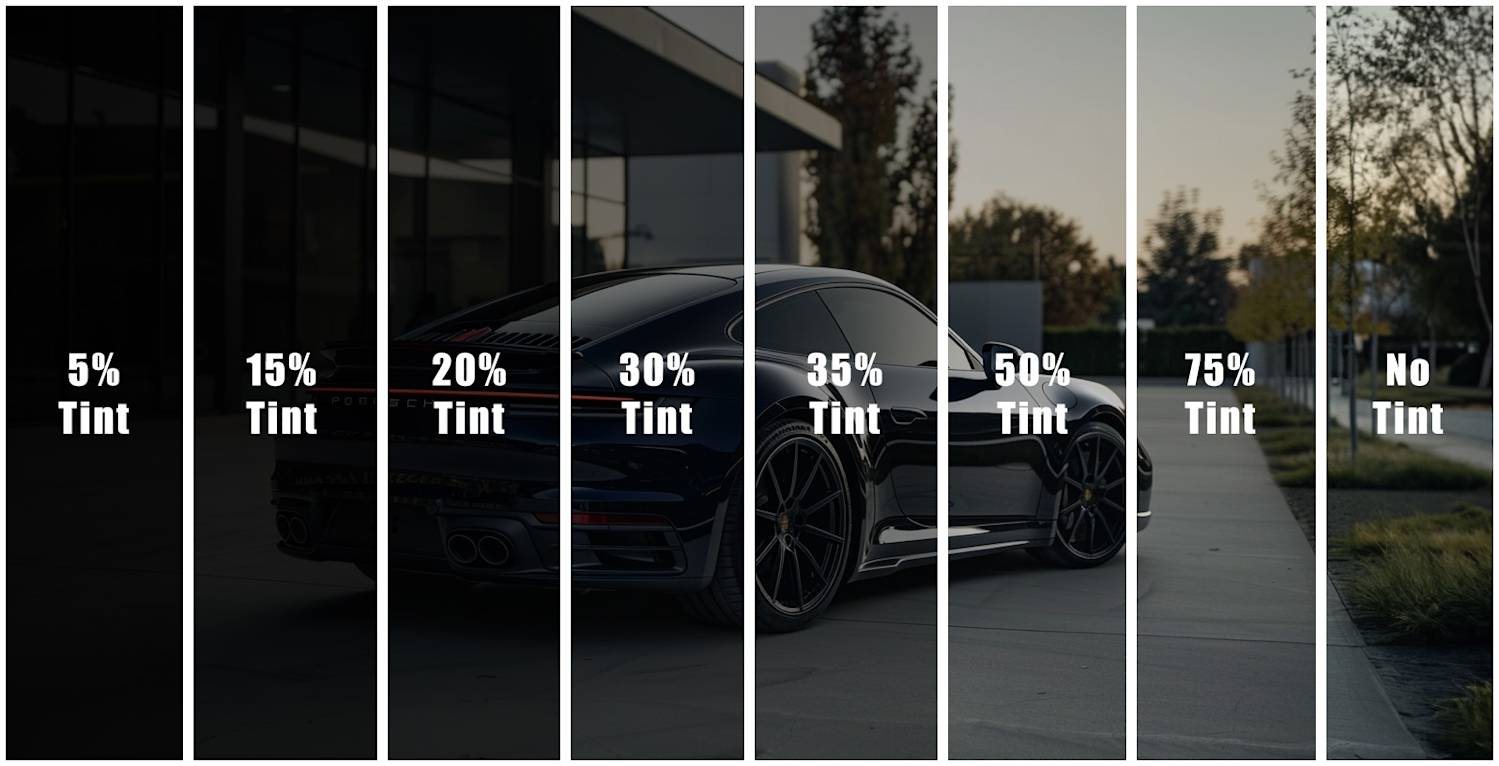
The percentages for every window, with examples, are in our Texas window tint law guide and in window tint percentages explained.
Three Details Most Guides Miss
- Out-of-state plates: the section doesn’t apply to “a motor vehicle that is not registered in this state.”
- Factory tint: windows that meet federal standards, including factory-tinted glass installed by the manufacturer, are exempt. That’s why trucks and SUVs can leave the dealer with dark rear glass; more in tint over factory privacy glass.
- Shops are on the hook too: a business that installs film without the compliance label required by Section 547.609 commits a misdemeanor with a fine of up to $1,000.
Why People Want Windshield Film
- Heat. The windshield is the biggest piece of glass on the car and sits right over the dash.
- Glare. A top strip cuts the low sun on morning and evening commutes. For headlight glare at night, see window tint and night driving.
- UV. Windshield glass already blocks much of the UV; film adds protection for skin and dash. More in UV protection window tint.
Choosing a Windshield Strip
- Shade: 25% or lighter, measured with the glass. A darker strip is outside the exception, even at the top.
- Finish: no mirror films; reflectance has to be 25% or less.
- Color: no red, blue or amber.
- Fit: the bottom edge should run straight and parallel to the top of the glass, ending at your AS-1 mark or 5 inches.
Windshield Film Options and Prices
We carry four windshield films: Autobahn Black ($180), Autobahn Black Ceramic ($250), 3M Ceramic IR ($350) and Autobahn Ceramic i3 ($350). Three of them are from the Autobahn film line. For sun strips, local pricing and when windshield film is worth it, see windshield tint in Lewisville. Every film and vehicle is on our window tint prices page.
Want something on the windshield that isn’t tint? Every one of our ceramic coating packages includes Ceramic Pro Glass on the outside of the windshield. It doesn’t tint the glass; it helps rain and bugs come off easier.
FAQ
Can you tint your front windshield in Texas?
Yes. The law’s exception covers a strip at the top: above the AS-1 line or within 5 inches of the top, whichever is closer to the top, with at least 25% light transmission and 25% or less reflectance. Many drivers also choose a light ceramic film on the full windshield for heat.
Can I get my whole windshield tinted?
Yes, we install full-windshield film with light ceramic films for $250 to $350. Texas’s written exception describes the top strip, so we go over the law and the medical exception with you before the install.
What is the darkest legal tint in Texas?
25% on the front side windows and on the windshield strip. The rear side windows and the back window can be any darkness if you have outside mirrors on both sides.
Is a windshield sun strip legal in Texas?
Yes, if it meets all four conditions in the law: top strip only, 25% or more light transmission, 25% or less reflectance, and not red, blue or amber.
What does AS-1 mean on a windshield?
It’s a marking printed near the top of the glass. In Texas it sets the lowest point a windshield strip can reach, unless 5 inches from the top is closer.
Can I get a ticket for windshield tint in Texas?
Film outside the exceptions in Section 547.613 is a misdemeanor, and a medical need for sun protection is a defense. A strip within the rules is always fine.
Does Texas still check tint at inspection?
Texas ended the annual safety inspection for non-commercial vehicles on January 1, 2025, so tint isn’t checked at an inspection station. The law on the glass is unchanged.
Questions About Windshield Tint?
Bring your car by or ask us first. Send a question with our online form or call (469) 234-5994. We’re at 2601 E State Hwy 121, Building 5, Suite 510, Lewisville, TX 75056.