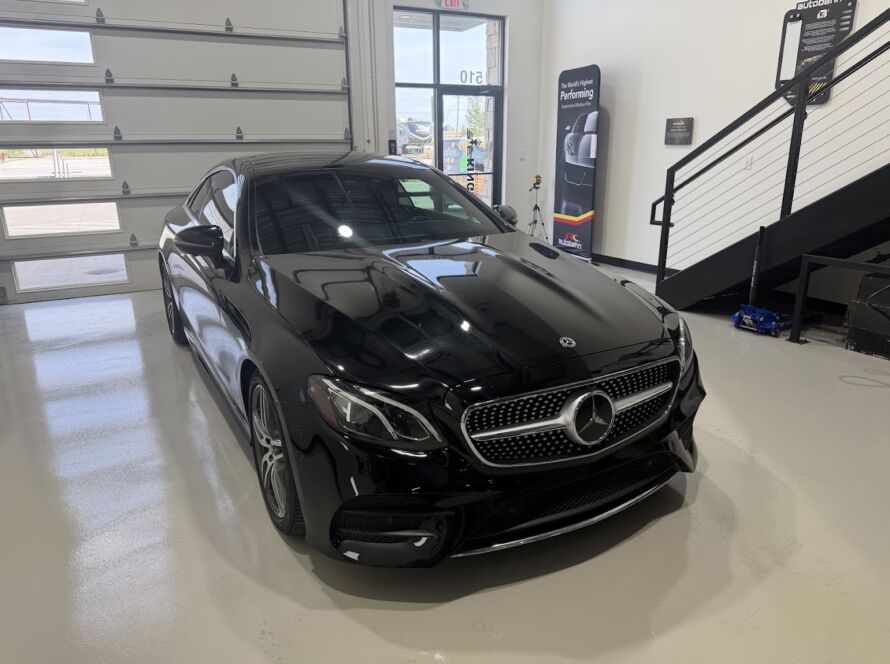
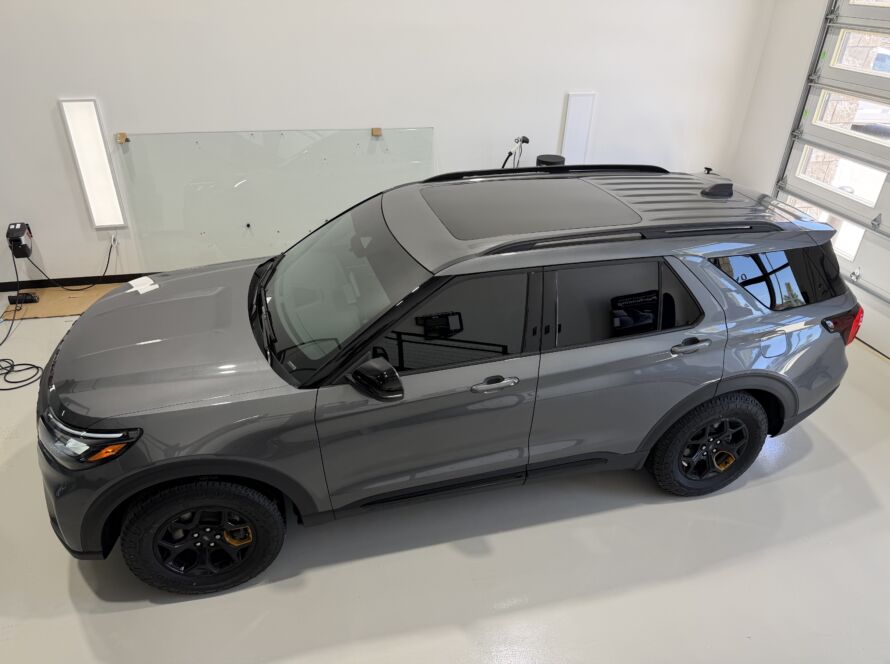
Driving through North Texas in July feels like being inside an oven, and standard factory glass does little to stop the radiating heat. Many drivers wonder if upgrading to ceramic tint is truly necessary or if a basic dark film is enough to keep the interior cool.
As a certified installer here in Lewisville, I see the difference in performance every day. While dyed films provide privacy, they don’t stop the infrared energy that burns your skin. Ceramic technology changes the equation by blocking the heat itself, not just the light.
Is ceramic window tint worth it for Texas heat?
Yes, ceramic tint is worth it for Texas heat because it blocks significantly more infrared radiation and total solar energy than dyed or carbon films. This results in a cooler cabin, less strain on your AC system, and protection from the intense North Texas sun.
To understand why it is worth the investment, you have to look at how heat enters your vehicle. There are three types of solar energy: ultraviolet (UV) rays, visible light, and infrared (IR) rays. Most basic tints block UV rays to prevent fading and some visible light to provide privacy. However, infrared rays are what actually carry the heat. When you sit in a car parked in Castle Hills and feel that “stinging” sensation on your arm, that is infrared heat.
Ceramic films are engineered with nano-ceramic particles that specifically target and reject these infrared rays. Instead of just darkening the window, the film acts as a thermal barrier. This means you can have a lighter tint that still outperforms a dark, non-ceramic film in terms of heat rejection.
Best heat rejection window tint for Texas summer
The best heat rejection window tint for the Texas summer is the Autobahn Ceramic i3+, which features a 74% Total Solar Energy Rejection (TSER). For those prioritizing infrared blocking, the 3M Ceramic Film offers 95% infrared rejection, making it a top choice for maximum comfort.
When we talk about “best,” we are looking at TSER (Total Solar Energy Rejection). TSER is the only number that matters because it combines the rejection of UV, visible light, and infrared into one single metric. The Autobahn Ceramic i3+ is the highest heat-blocking automotive film currently available, boasting a 74% TSER. This is a massive leap over economy-grade films.
If your primary goal is to stop that specific “burning” feeling from the sun, the 3M Ceramic Film is an incredible option with 95% infrared rejection. Between these two, you are getting the absolute peak of current window film technology. Whether you are commuting from Flower Mound or spending the day near Lake Lewisville, these films ensure your interior stays habitable even during a heatwave.
Ceramic tint vs carbon tint for Texas heat
Ceramic tint is superior to carbon tint for Texas heat because it actively blocks infrared radiation, whereas carbon tint primarily provides a matte look and blocks visible light. Ceramic films offer much higher TSER ratings, resulting in a significantly cooler vehicle interior.
Carbon films were once the “premium” alternative to dyed films. They don’t fade over time like dyed films do, and they provide a clean, non-reflective appearance. However, carbon is not a heat-rejection powerhouse. It blocks the sun’s glare, but it doesn’t stop the thermal energy from penetrating the glass as effectively as ceramic does.
In a climate like ours in North Texas, the difference is palpable. With carbon, your AC has to work harder to fight the heat coming through the glass. With ceramic, the heat is stopped at the window. Furthermore, ceramic films are non-conductive, meaning they won’t interfere with your cell phone signal or GPS, which can sometimes be an issue with metallic-based films.
Comparing the Tiers: Pricing and Performance
To give you a clear idea of the investment, here is the pricing breakdown for full-vehicle installations at our Lewisville shop. Please note that these are based on the specific film tiers we offer.
| Film Tier | Coupe | Sedan | Pickup | SUV |
|---|---|---|---|---|
| Autobahn Black (Economy) | $269 | $299 | $399 | $399 |
| Autobahn Ceramic (Balanced) | $360 | $449 | $499 | $499 |
| 3M Ceramic Film (IR 95%) | $499 | $599 | $649 | $649 |
| Autobahn Ceramic i3 (Max Performance) | $549 | $649 | $649 | $699 |
As you can see, the price gap between the economy Autobahn Black and the high-performance Ceramic i3 is significant, but so is the performance. For a sedan, the difference is $350. For many of our customers in The Colony and Highland Village, that investment pays off in the form of a much more comfortable drive and less wear and tear on their vehicle’s interior materials.
Best window tint for Texas heat near me
The best window tint for Texas heat near Lewisville is a high-TSER ceramic film, such as the Autobahn Ceramic i3+ or 3M Ceramic. These films are installed by certified professionals at Kingdom Window Tint, ensuring a precise fit and maximum heat rejection performance.
When searching for the best option, you should look for a shop that doesn’t just offer “ceramic” as a buzzword but provides specific films with verified specs. At Kingdom Window Tint, we are certified Autobahn and 3M installers. This means every single member of our team is certified, not just the business owner. This certification ensures the film is applied correctly, without bubbles or peeling, which is critical for the film to perform its heat-blocking duties.
We operate as an on-site shop only at our Lewisville location. We do not offer mobile services because the quality of a tint job depends on a controlled, dust-free environment. By bringing your vehicle to our facility, we can ensure the precision that a 5.0-star rated shop is known for.
Best window tint for blocking infrared heat in North Texas
The best window tint for blocking infrared heat in North Texas is the 3M Ceramic Film, which provides 95% infrared rejection. For the absolute highest overall heat blocking, the Autobahn Ceramic i3+ is the top choice with a 74% TSER rating.
Infrared rejection is the “secret sauce” for Texas driving. If you have ever felt the heat radiating off your dashboard or the seatbelt buckle burning your skin, you are feeling the effects of infrared light. While standard films can make the car look dark, they don’t stop this energy. The 3M Ceramic Film is specifically engineered to stop 95% of that IR energy.
For those who want the absolute maximum in overall performance, the Autobahn Ceramic i3+ is the gold standard. With a 74% TSER, it is the highest heat-blocking automotive film currently available. This is the ideal choice for anyone who spends hours in traffic in Carrollton or Coppell and wants to maintain a cool cabin without freezing themselves out with the AC.
Best way to reduce heat in my car parked in Lewisville sun
The best way to reduce heat in a car parked in the Lewisville sun is to combine a high-TSER ceramic window tint on all side windows and the windshield. This blocks the majority of solar energy from entering the cabin, keeping the interior significantly cooler.
Many people tint their side windows but leave the windshield clear. This is a mistake in North Texas. The windshield is the largest piece of glass on your vehicle and acts as a massive heat sink. Adding a ceramic film to the windshield is the single most effective way to drop the internal temperature of your car.
We offer several windshield options depending on your budget and heat needs:
- Autobahn Black: $180 (Entry-level)
- Autobahn Black Ceramic: $250 (Balanced upgrade)
- 3M Ceramic IR: $350 (Premium heat rejection)
- Autobahn Ceramic i3: $350 (Top-tier performance)
By pairing a full-vehicle ceramic install with a ceramic windshield, you create a thermal envelope around your car. This prevents the “greenhouse effect” where heat enters through the glass and becomes trapped inside the cabin.
How to reduce car heat in Lewisville summer
To reduce car heat in the Lewisville summer, install a high-performance ceramic window tint with a high TSER rating. Additionally, ensuring the windshield is treated with ceramic film will block the primary source of heat entry into the vehicle.
Beyond the film itself, the quality of the installation is what ensures the heat rejection works. A poor install with gaps or improper trimming can lead to premature failure. We take a quality-first approach, and every installation takes approximately 2-3 hours to ensure every edge is perfect.
One of the biggest advantages of our process is the immediate usability. Most shops will tell you that you cannot roll your windows down for 2 to 5 days while the film “cures.” At Kingdom Window Tint, you can roll your windows down IMMEDIATELY after the install. We use a process that eliminates the cure wait, meaning you can enjoy the breeze and the cooler temperatures the moment you leave our shop.
We stand behind our work with a nationwide lifetime, 100% hassle-free warranty on every Autobahn install. This isn’t a shop-limited warranty; it is nationwide. There is no fine print and no fight—just a commitment to quality workmanship.
FAQ
How much does it cost to tint a car in Lewisville, TX?
Pricing varies by vehicle type and film tier. For a full-vehicle install, Autobahn Black starts at $269 for coupes and $299 for sedans. Premium options like the Autobahn Ceramic i3 range from $549 for coupes to $699 for SUVs.
What are the legal tint limits in Texas?
Texas law requires a minimum of 25% VLT (Visible Light Transmission) on the front side windows. However, the back side windows and the rear windshield may be any darkness you choose.
How long does it take to get my windows tinted?
A professional window tint installation at our Lewisville shop typically takes between 2 and 3 hours. Because of our specific installation process, there is no cure wait, and you can operate your windows immediately.
Get Your Free Window Tint Quote in Lewisville
Ready for premium Autobahn film, immediate window roll-down, and a lifetime 100% hassle-free warranty? Get an instant quote with our online form or call (469) 234-5994 to book your install at our Lewisville, TX shop today.